
Gamified Learning: How Are Online Games Transforming Education
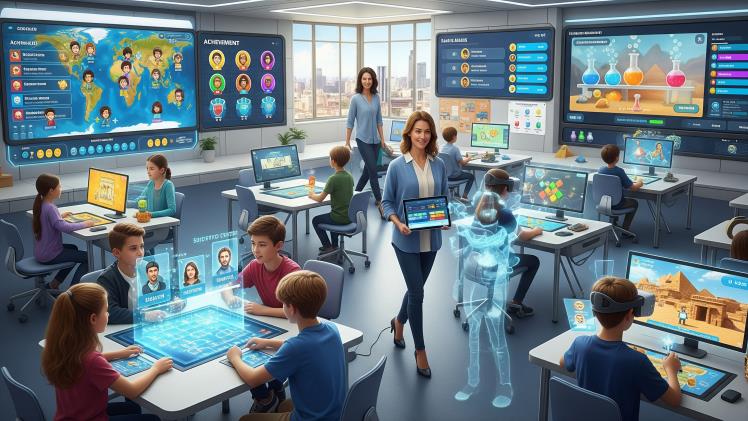
Gamified learning is not a silver bullet. It is a toolkit, where small mechanics like points, levels, and timed challenges can make routine practice feel less like drudgery and more like play. Teachers see the mood shift when a quiz turns into a quest. Students who usually lurk at the edges jump in because the stakes feel safe and the feedback is quick.
Online games are gaining traction for several reasons. They meet learners where they already spend time. They offer immediate feedback that textbooks rarely give and let teachers scale activities to different skill levels without rebuilding the whole lesson.
In practice, this nudges students to stick with hard problems because the system keeps responding rather than silently judging. That matters when attention is fragile and a day is packed with distractions.
The Rise of Gamified Learning: Historical Context
The roots go back further than most folks remember. Early drill‑and‑practice software tried to turn repetition into a game, with tiny sprite rewards and chimes for correct answers. Clunky, sure, but it planted the seed.
Over time, classrooms experimented with web‑based quizzes, scavenger hunts, and puzzle maps tied to curriculum standards. The shape kept changing while the goal stayed steady.
Hence, make practice active, and keep feedback tight. Also, give learners choices. Oddly enough, even a simple aviator game built to teach velocity ideas showed how theme and mechanics can make abstract concepts less intimidating for newcomers.
Current Trends
In 2025, popular tools lean on three things. Lightweight access on any device. Data dashboards that do not drown teachers in charts and flexible modes that allow solo play, pairs, or small teams without resetting everything. Integration is getting cleaner.
Many platforms plug into learning management systems, so results land where teachers already grade. Teachers remix templates, run quick formative checks, and stack mini‑challenges at the end of a lesson.
The practice is less about flashy graphics and more about flow. Do learners move, decide, and reflect within short cycles? If yes, the tool earns its keep.
Benefits of Gamification in Education
The following are the major benefits of gamification in education:
1. Increased Engagement
Game mechanics nudge attention. For instance, in games like Luckywave, points and levels provide learners with small, visible goals. Timers add urgency in short bursts without turning stress into panic when calibrated well.
The real key is agency. Let students pick paths, choose tools, or swap roles, and participation goes up because they own the route. Teachers report that quieter students respond to lightweight systems that whisper feedback rather than shout judgment.
2. Improved Knowledge Retention
Interactive cycles build memory through spaced practice. A concept revisited across different game modes sticks better than a single lecture pass. When feedback is immediate, misconceptions surface fast and get corrected while attention is high.
Mini‑quests anchor abstract ideas in concrete moves. Students recall the path they took, not just the definition they heard. Reflection screens at the end of a round help learners name what worked and what did not.
3. Development of Soft Skills
Gamified tasks can tap collaboration without turning group work into chaos. Clear roles, turn‑taking rules, and shared objectives push teams to communicate and decide. Problem‑solving improves because levels rarely allow brute-force solutions. You have to plan, iterate, and sometimes scrap a strategy when the puzzle shifts.
Critical thinking shows up in how students justify their moves and debate which tactic fits the next round. Teachers can watch these skills unfold in real time, not just infer them from final scores. The soft stuff becomes visible, coachable, and worth grading with rubrics that reward process as much as outcome.
Challenges and Limitations
The following are some of the major challenges and limitations of gamification of learning:
1. Accessibility Issues
Not every student has a reliable device or bandwidth. That reality won’t vanish because a class wants to play. Design choices matter. Tools that run on low‑end phones and cache activities for spotty networks are more inclusive. Print‑friendly alternatives should be available on days when tech fails.
Also, schools can schedule offline practice windows and device pools, but teachers still need escape hatches. Accessibility is also about cognitive load. Busy screens can overwhelm. Moreover, cleaner layouts, readable fonts, and audio support help more learners participate without feeling shut out by design quirks.
2. Screen Time Concerns
Too much screen time is a fair worry. Balance looks like short sprints, not marathons. Ten minutes of tight play, quick debrief, then hands‑on work away from the device.
When teachers match mechanics to goals, screens become tools, not default settings. Also, make sure there are no late‑night leaderboards and no endless grinding for points. Students should know why a game is being used and what learning target it supports.
If misuse creeps in, it is usually because the activity turned into entertainment with no exit. That is solvable with pacing and purpose.
3. Teacher Training
Gamified teaching is a craft. Teachers need time to try tools, break them, fix them, and share tricks with colleagues. A workshop helps, but coaching helps more. Quick playbooks that explain setup, alignment to standards, and troubleshooting save hours. Assessment practice should fold in, too.
If you only grade the points, you miss the thinking. Rubrics that reward reasoning, collaboration, and reflection encourage deeper play. Professional development works best when it models the same loop students use. Try, get feedback, and then adjust. Teachers are learners in this system as much as students.
Future of Gamified Education
The following are some of the trends you must expect in the future:
1. AI and Personalization
Adaptive engines will quietly tune difficulty and hints while students play. The best versions won’t feel like surveillance. They will feel like a thoughtful coach who knows when to whisper a clue and when to raise the challenge. Personalization should support, not sort.
Moreover, keep teacher oversight central. AI can suggest, but humans decide what fits the class culture and goals.
2. Virtual Reality and Immersive Learning
VR will move from novelty to specific use cases where presence matters. Lab simulations, field trips across time and place, and spatial puzzles that are hard to grasp on a flat screen.
The value is immersion with guardrails, with short sessions, clear objectives, and debriefs that connect virtual experience to real assessment.
3. Global Collaboration
Connected play can link classrooms across borders. Shared missions teach content and civics in the same breath. Language practice gets a purpose beyond drills when teams solve problems with peers in other countries.
Meanwhile, culture shows up in gameplay choices, and students learn to ask questions with respect. This way, the game becomes a bridge, not a wall.
Online Gaming Is the Future!
Gamified learning works when mechanics serve clear outcomes and teachers steer the flow. Engagement rises because feedback is fast and agency is real. Retention improves through spaced practice. Meanwhile, soft skills grow because teams learn to plan, decide, and reflect.
The limits are practical, not mystical. Access, time, and training decide whether the experience lifts a class or distracts it. The next step is measured adoption. Pick one activity, pilot it, gather student voice, adjust the rubric, then scale. Also, keep the games humble and the learning loud.